
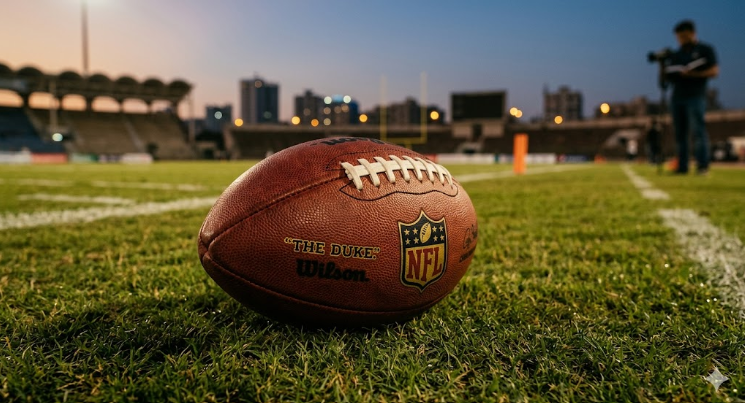
Have you ever wondered why the NFL uses a specific ball for every single play? It isn’t just any piece of leather. It is the duke american football. For over 80 years, this iconic ball has been at the center of every touchdown, interception, and Super Bowl victory. As someone who has spent years analyzing sports equipment and digital trends, I can tell you that this ball is more than gear—it is a piece of history. In this guide, we will look at how it’s made, where it got its name, and why pro players refuse to use anything else.
What is The Duke American Football?
The official game ball of the National Football League is known as the duke american football. While fans see it flying through the air on Sundays, few realize the heritage it carries. Produced by Wilson Sporting Goods, this ball is the only one used in professional NFL games. It is designed to meet strict standards for weight, size, and grip.
The name “The Duke” is a tribute to Wellington Mara, the late owner of the New York Giants. His father named him after the Duke of Wellington, and NFL players eventually gave him the same nickname. Today, the duke american football serves as a permanent memorial to his impact on the league. When you hold one, you aren’t just holding a ball; you are holding the official choice of legends like Tom Brady and Patrick Mahomes.
A Glimpse into the History of the NFL Ball
The partnership between the NFL and Wilson began in 1941. Before this, different teams often used different types of balls, which made the game inconsistent. To fix this, the league sought a single, high-quality supplier. Since then, the duke american football has been the constant companion of the sport.
Interestingly, the name actually disappeared for a while. After the NFL and AFL merged in 1970, the ball’s design changed, and the “The Duke” branding was removed. However, following the passing of Wellington Mara in 2005, the league brought the name back to honor him. Since 2006, every official game ball has proudly displayed the signature of the commissioner and the famous nickname of the man who helped shape the modern NFL.
How The Duke American Football is Handcrafted
One of the most amazing things about the duke american football is that it is still made by hand. In a small factory in Ada, Ohio, skilled workers produce these balls with incredible precision. They don’t use giant robots; they use their hands, sewing machines, and years of experience.
The process starts with four panels of premium leather. These panels are cut, stamped with the NFL shield, and then sewn together inside out. A worker then has to “turn” the ball right-side out—a physically demanding task that requires a lot of strength. Once turned, a bladder is inserted, and the ball is laced. Because each the duke american football is handmade, every single one has a slightly unique feel, yet they all meet the NFL’s perfect specifications.
Technical Specifications of the Official Ball
To be used on a professional field, the duke american football must be perfect. If the ball is too heavy or too light, it could ruin a quarterback’s throw or a kicker’s accuracy. The league has very specific rules about what makes a ball “official.”
The ball is made of cowhide leather that has a “pebbled” texture. This texture is vital for grip, especially in rain or snow. Inside, there is a multi-layered bladder that holds air better than standard rubber. When you see a quarterback throw a perfect spiral with the duke american football, it’s because the ball’s weight distribution is balanced to perfection.
Quick Spec Table: The Duke vs. Recreational Balls
| Feature | The Duke (Official) | Recreational/Composite |
| Material | Premium Horween Leather | Synthetic/Composite |
| Grip Type | Natural Pebbled Texture | Tacky Coating |
| Laces | Pro-Grade Double Lacing | Single PVC Laces |
| Manufacturing | Handmade in the USA | Often Machine-Made |
| Durability | High (Requires Break-in) | High (Ready to use) |
| Usage | Professional NFL Games | Backyard/Youth Play |
The Secret of the Horween Leather
Why does the duke american football feel so much better than a cheap ball from a big-box store? The answer is the leather. Wilson gets its leather from the Horween Leather Company in Chicago. This is one of the oldest and most respected tanneries in the world.
The leather used for the duke american football is treated with a secret blend of oils and waxes. This makes the leather “tacky” or sticky to the touch. This “tack” is what allows players to catch the ball with one hand. Over time, as a team uses the ball in practice, the leather breaks in and becomes even easier to handle. This professional-grade material is the reason the ball turns a dark, rich brown color after it has been used.
Why Quarterbacks Love The Duke
For an NFL quarterback, the ball is their most important tool. Many players have shared their personal insights on why the duke american football is superior. They often mention the “laces” and the “nose” of the ball. The double lacing provides extra points of contact for the fingers, which helps in generating a faster spin.
A faster spin means the ball can cut through the wind more effectively. When a quarterback drops back to pass, they need to know that the duke american football will go exactly where they aim. The consistency provided by Wilson’s handmade process ensures that whether they are playing in the heat of Miami or the freezing cold of Green Bay, the ball performs the same way every time.
The Role of the Ball in Special Teams
Kickers and punters have a different relationship with the duke american football. For them, it’s all about the “sweet spot.” Because the ball is hand-turned and molded, it has a very specific shape that kickers rely on for long field goals.
In the NFL, “K-Balls” are used specifically for kicking. These are a version of the duke american football that are strictly managed to ensure no one “tempers” with them to make them easier to kick. The pressure inside the ball is also checked multiple times before kickoff. Watching a kicker nail a 60-yard field goal shows just how much engineering and care goes into every single ball produced in that Ohio factory.
Breaking in The Duke: The “Prep” Process
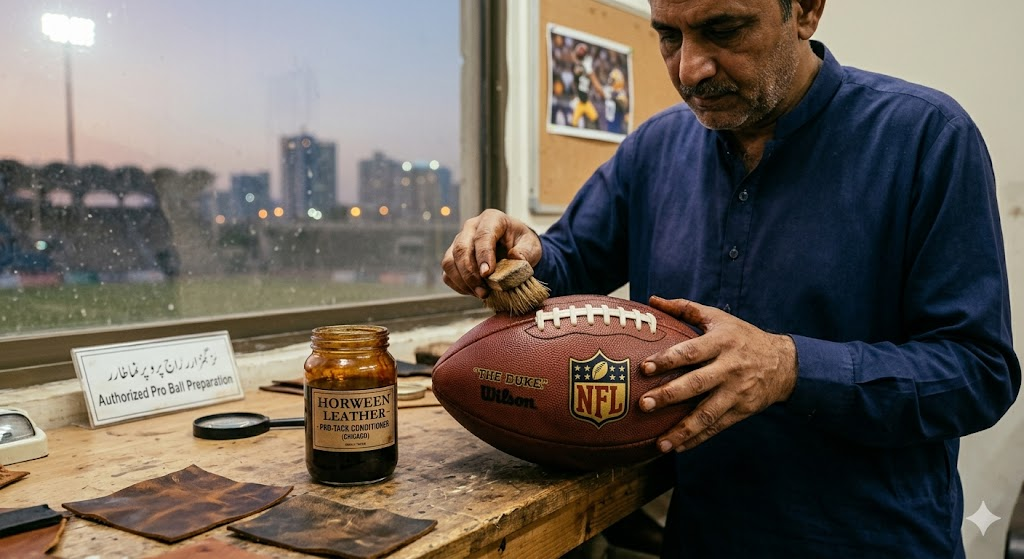
You might be surprised to learn that NFL teams don’t use a brand-new the duke american football straight out of the box. Every team has a “ball boy” or equipment manager who spends hours prepping the balls. This process involves brushing the leather, applying a small amount of conditioner, and even using wet towels to get the perfect texture.
This preparation helps the leather reach its peak performance. It removes the factory wax and brings out the natural grip. When you buy a the duke american football for yourself, you might find it feels a bit stiff at first. That is normal! Just like a high-quality baseball glove, it needs a little love and use to become the perfect game-day companion.
The Evolution of the Ball’s Shape
The shape of the football has changed a lot since the early 1900s. Originally, footballs were much rounder, almost like watermelons. This made them great for kicking but very hard to throw. As the “forward pass” became a major part of the game, the design of the duke american football evolved to be more aerodynamic.
Today’s ball is a “prolate spheroid.” This shape is the best of both worlds. It still has enough surface area for a kicker’s foot, but it is narrow enough for a human hand to grip and throw. Every curve and stitch on the duke american football is there for a reason, helping the game move faster and more excitingly than ever before.
Where to Buy an Authentic NFL Ball
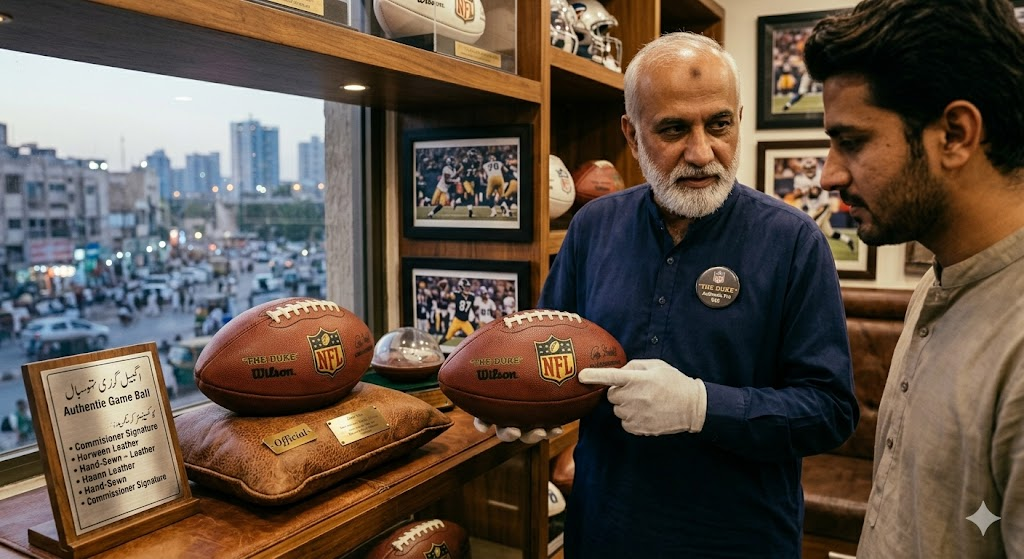
If you want to play like the pros, you can actually buy an authentic the duke american football. However, you should be careful to look for the “Official” tag. Wilson sells many types of balls, including “Replica” and “Composite” versions. While these are great for the backyard, they are not the same as the leather game ball used in the NFL.
An authentic the duke american football will usually cost more because of the premium leather and handmade labor involved. It will also feature the “The Duke” stamp and the current NFL Commissioner’s signature. Owning one is a great way to connect with the sport, whether you are a collector or someone who just loves throwing a perfect spiral at the park.
Frequently Asked Questions
Why is it called “The Duke”?
It is named after Wellington Mara, the longtime owner of the New York Giants. His nickname was “The Duke,” given to him by his players because his father named him after the Duke of Wellington.
Is every NFL ball made by hand?
Yes! Every single the duke american football used in an NFL game is handcrafted at the Wilson factory in Ada, Ohio. This ensures the highest quality and consistency for the league.
What kind of leather is used?
The ball is made from premium cowhide leather sourced from the Horween Leather Company. It is treated with a specific set of oils to provide a natural, tacky grip.
Why does the ball look different on TV?
Teams “prep” their balls by brushing and conditioning them. This makes the leather darker and more textured, which looks different from a brand-new, light-tan ball you might see in a store.
How much does the ball weigh?
An official the duke american football weighs between 14 and 15 ounces. It must also be inflated to a pressure of 12.5 to 13.5 pounds per square inch (PSI).
Can I use the ball in the rain?
Yes, the leather is designed to maintain its grip even when wet. However, leather balls should be dried off after use and kept away from extreme heat to prevent the leather from cracking.
Conclusion
In the world of professional sports, few things are as consistent as the duke american football. While players, coaches, and even stadiums change, the ball remains the heartbeat of the game. Its journey from a leather hide in Chicago to a factory in Ohio, and finally to the bright lights of a stadium, is a testament to American craftsmanship.
Whether you are a die-hard fan or a casual viewer, knowing the story behind the ball adds a new layer of appreciation to every Sunday kickoff. The next time you see a game-winning catch, remember the hands that sewed that ball and the legend whose name it carries.
What do you think? Does the history of the ball make you see the game differently? Let us know your favorite NFL memory in the comments below!