
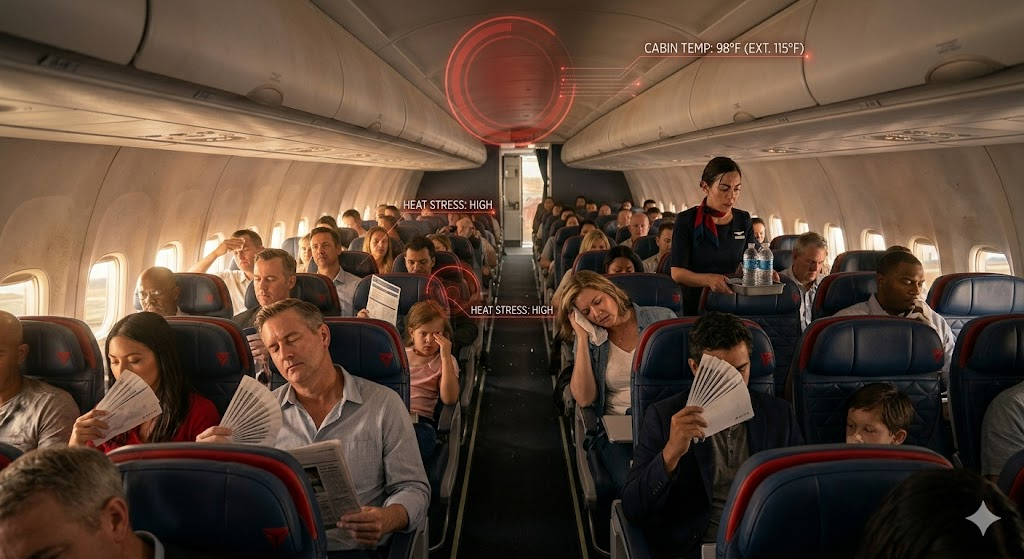
Imagine sitting inside a giant metal tube on the ground. Outside, the desert heat is a scorching 115 degrees. Inside, the air conditioning stops working. The air gets hot, thick, and very hard to breathe. This scary situation is exactly what happened to the Delta Flight DL555 Stranded Passengers at Harry Reid International Airport in Las Vegas.
A routine trip from Nevada to Atlanta turned into an unforgettable emergency. Hundreds of travelers found themselves trapped on the runway for hours. In this article, we will break down the entire timeline. We will look at what went wrong, how the heat affected people, and what rules protect you if this ever happens to your flight. Let us dive into the full details of this major airline event.
What Was Delta Flight DL555?
Delta Air Lines Flight 555 is a regularly scheduled domestic flight. It usually carries travelers from Las Vegas, Nevada, to Atlanta, Georgia. The aircraft used for this trip was a large Boeing 757. On this specific summer day, the plane was fully loaded with 197 passengers and six crew members. Everyone expected a smooth, comfortable flight across the country.
Instead, the aircraft joined a long line of more than a dozen planes waiting on the hot pavement. Delays are common in busy airports, but the conditions inside this plane quickly turned dangerous. The ground delay lasted for hours, setting off a chain reaction of mechanical and medical issues that shocked the travel industry.
The Extreme Las Vegas Heat Wave
The weather in Las Vegas during July can be incredibly harsh. On the afternoon of the incident, outdoor temperatures reached triple digits, peaking between 111 and 115 degrees Fahrenheit. The tarmac, which is made of dark asphalt, absorbs and reflects this extreme heat, making the air around the plane even hotter.
When an airplane sits on the ground without a moving engine, it relies on special equipment to stay cool. On this day, the cooling system failed completely. Without fresh air, the cabin became a giant oven. The delta flight dl555 stranded passengers were trapped in a sweltering environment that quickly became unsafe for human beings.
Complete Breakdown of the Tarmac Timeline
To understand how things got so bad, we have to look at how the time ticked away. The plane was scheduled to leave around 1:45 PM. After boarding, the aircraft left the gate but could not take off. It sat on the taxiway for roughly three full hours while the heat inside continued to rise.
During the first hour, people noticed the cabin getting warm. By the second hour, the air conditioning was totally dead, and the air grew suffocating. By the third hour, health emergencies began to pop up all over the plane. The table below shows the exact breakdown of how this crisis unfolded on the ground.
Detailed Incident Timeline
| Time Elapsed | What Happened on the Tarmac | Danger Level |
| 0 – 60 Minutes | The plane leaves the gate and sits in a long takeoff queue. | Low |
| 1 – 2 Hours | The aircraft stays grounded; the cabin cooling system fails. | Moderate |
| 2 – 3 Hours | Temperatures soar past 100°F inside; passengers face medical issues. | Critical |
| 3+ Hours | Paramedics arrive on the plane, and the flight is finally canceled. | Extreme |
Serious Medical Emergencies in the Cabin
The human body is not meant to handle extreme heat in tight spaces. As the temperature inside the Boeing 757 climbed, the delta flight dl555 stranded passengers started feeling incredibly sick. Many people began sweating heavily, felt dizzy, and struggled to breathe easily.
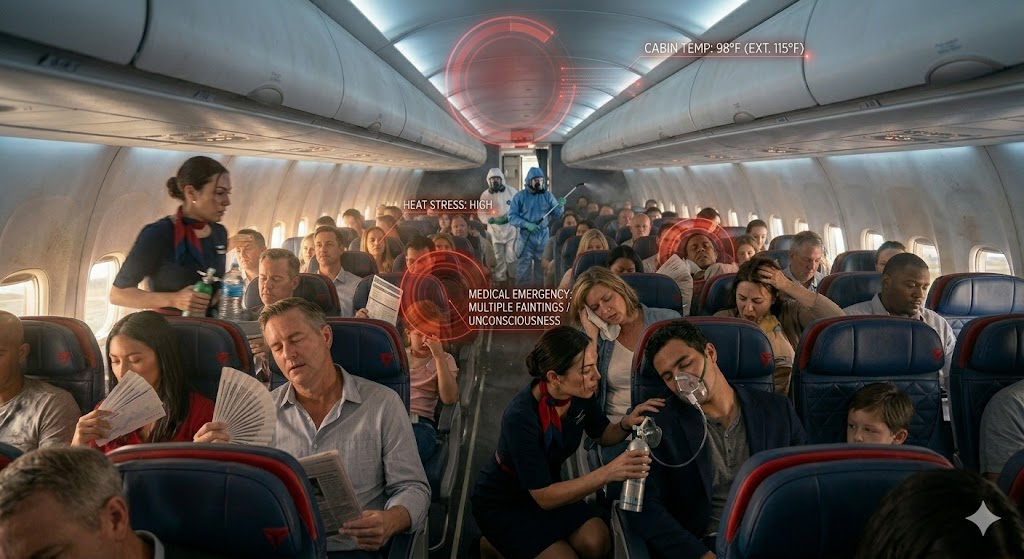
The pilot eventually told everyone to press their call buttons if they needed medical help. Soon, the flight attendants were rushing down the aisles with oxygen masks. Several passengers actually fainted and lost consciousness right in their seats. Some people became so physically ill from the heat that the airline had to call a special cleaning crew to board the plane.
Emergency First Responders Arrive
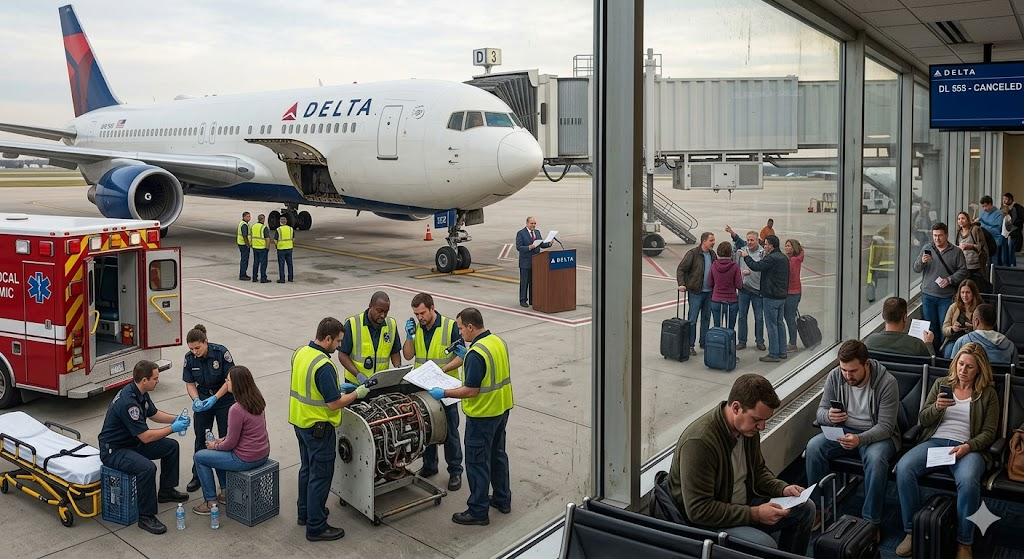
The situation became so terrible that the flight crew had to call for emergency outside help. Paramedics and airport first responders rushed to the aircraft with stretchers and medical gear. They walked through the hot aisles to treat the people who were suffering the most from heatstroke and dehydration.
At least five passengers had to be wheeled off the aircraft in wheelchairs and stretchers. Two people, including one hard-working flight attendant, were taken directly to a local hospital for urgent treatment. The plane could no longer fly because even the crew members were too sick to operate the aircraft safely.
Why Didn’t the Passengers Just Get Off?
Many people wonder why the delta flight dl555 stranded passengers did not simply open the doors and leave. In aviation, passengers cannot just walk off a plane whenever they want. For safety and security reasons, an aircraft must be attached to a airport gate, or the captain must get special permission from air traffic control to let people off.
During the delay, the airline told passengers they could choose to leave the plane, but there was a major catch. The agents warned them that if they got off, it might take days to get another open seat to Atlanta. Many travelers felt trapped between staying in a hot plane or being stuck in Las Vegas for a week.
Delta Air Lines Explains the Breakdown
After the plane was finally brought back to the gate, Delta Air Lines officially canceled the flight. The airline issued a formal apology to all the families and travelers who went through this awful experience. They gave the delta flight dl555 stranded passengers travel vouchers, refunds, and helped them find hotel rooms for the night.
Delta stated that their ground teams and technicians were looking deeply into what caused the cabin cooling system to fail. They praised the quick action of the local paramedics. However, the apology was not enough to stop people from being angry about how the long delay was handled by management.
Federal Rules for Lengthy Tarmac Delays
The United States government has strict rules to protect air travelers from being held on planes for too long. The Department of Transportation (DOT) created the “Three-Hour Tarmac Rule” for domestic flights. This rule states that an airline cannot keep you on the tarmac for more than three hours without giving you the option to safely deplane.
Important Passenger Rule: Airlines must also provide free water and basic snacks within two hours of a tarmac delay. They must keep the bathrooms working and provide medical care if someone gets sick.
If an airline breaks these rules, they can face huge federal penalties and fines.
The Government Launches an Investigation
Because the delta flight dl555 stranded passengers were kept in such dangerous heat, the federal government stepped in. Transportation Secretary Pete Buttigieg publicly questioned why the airline kept people on the aircraft under those extreme desert conditions. He stated that tarmac rules are actively enforced to protect human safety.
The Department of Transportation launched a formal investigation into the incident. Investigators want to know why the ground crew did not bring the plane back to the gate much sooner. They are looking at the airline’s communication logs to see if there was a major mistake made by the flight operators.
How to Protect Your Rights When Traveling
This scary Las Vegas event teaches us that travelers must always know their rights. If you ever find yourself stuck on a plane during a long delay, do not stay silent. Keep track of the exact time the aircraft doors close so you know how long you have been waiting.
Ask the flight attendants for water and snacks once the clock hits the two-hour mark. If the cabin feels dangerously hot or unsafe, let the crew know immediately. You can also use your phone to document the conditions and report the issue directly to the Federal Aviation Administration (FAA) consumer website.
Conclusion
The story of the delta flight dl555 stranded passengers is a strong reminder that airline safety is about more than just flying safely through the air. It is also about taking care of people while they are waiting on the ground. No one should ever have to go to the hospital just from sitting on a delayed airplane.
As summer temperatures continue to rise around the world, airlines must update their rules for extreme heat waves. Hopefully, the federal investigations will force companies to build better backup plans. Have you ever experienced a terrible flight delay? Share your travel stories in the comments below!
Frequently Asked Questions
What happened to Delta Flight DL555?
Delta Flight 555 was stuck on the Las Vegas tarmac for around three hours in 115-degree weather. The plane’s air conditioning failed, causing the cabin to get dangerously hot. Multiple passengers fainted, and the flight was eventually canceled.
How many passengers were on the plane?
There were 197 passengers and six crew members on board the Boeing 757 aircraft. Many of these delta flight dl555 stranded passengers required medical attention from local paramedics who boarded the plane.
Did anyone go to the hospital during the delay?
Yes. At least five people were wheeled off the plane for medical reasons. Two individuals, including a flight attendant, were taken to a local hospital to be treated for heat-related illness.
What is the maximum time a plane can sit on the tarmac?
Under federal DOT rules, commercial airlines cannot keep passengers on a domestic flight tarmac for more than three hours. For international flights, the maximum allowed time is four hours before they must let you off.
What are airlines required to provide during a flight delay?
Airlines must provide adequate food and drinking water within two hours of a tarmac delay. They must also make sure the bathrooms still work and provide proper medical attention if a passenger becomes sick.
Did the delta flight dl555 stranded passengers get compensated?
Yes, Delta Air Lines apologized to the travelers on Flight 555. The airline provided direct compensation, travel vouchers, and helped the passengers book new flights to their destinations.