
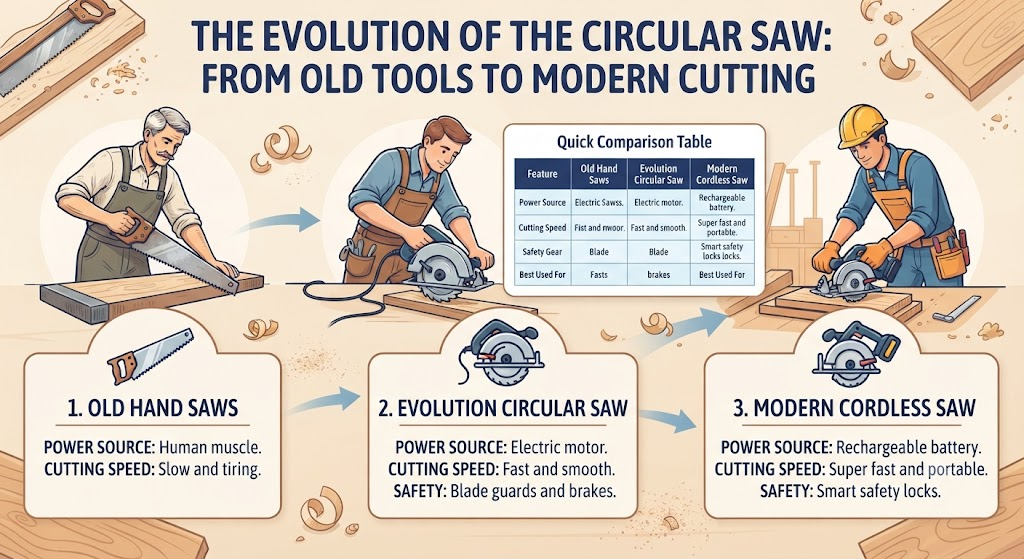
Quick Comparison Table
| Feature | Old Hand Saws | Evolution Circular Saw | Modern Cordless Saw |
| Power Source | Human muscle | Electric motor | Rechargeable battery |
| Cutting Speed | Slow and tiring | Fast and smooth | Super fast and portable |
| Safety Gear | Basic care | Blade guards and brakes | Smart safety locks |
| Best Used For | Small cuts | Big boards and framing | Quick job site cuts |
Have you ever tried to cut a giant piece of wood with a tiny hand Evolution of the Circular Saw? It takes forever, and your arms get so tired! Long ago, builders faced this same big problem every single day. They needed a better, faster way to chop through thick logs and heavy wooden boards. That is why inventors started dreaming up a spinning blade that could do all the hard work for them. Today, we are going to look at the amazing story of the evolution circular saw and how it turned into a superstar tool in every workshop. It is a neat journey filled with smart ideas, spinning metal teeth, and a whole lot of sawdust. Let us dive right in and see how this cool invention came to life!
The Very First Ideas for Cutting Wood
Before we had shiny power tools, people used long metal strips with teeth to cut timber. But around the late 1700s, a clever woman named Tabitha Babbitt saw workers using a water wheel to power a straight saw blade. She noticed that a round blade attached to a spinning wheel worked much faster and wasted less energy. This bright spark led to the very first design of a round cutting disk. While it was mostly used in sawmills at first, it planted the seed for smaller, hand-held machines later on. People realized that round blades could slice through material in a smooth and steady circle. This simple moment in history started the big evolution circular saw movement that changed construction forever.
Moving from Big Factories to Handheld Power
After those early sawmill days, inventors wanted to shrink the big spinning blade down to a size a single person could hold. In the early 1900s, smart engineers figured out how to hook a small electric motor to a circular metal blade. This meant workers no longer had to stay tied to a giant factory machine or a loud steam engine. They could walk right up to a piece of lumber and make a clean cut on the spot. This portable magic made building houses and fixing fences way easier. The evolution circular saw took a huge leap forward during these busy years. Workers smiled big because their heavy workload suddenly felt a whole lot lighter.
Adding Safety Guards to Protect the Builder
With great power comes the need for great safety! Those early spinning blades were super fast, which also made them a little bit scary to use. Makers soon realized they had to cover the sharp teeth when the tool was not cutting wood. So, they invented a spring-loaded guard that slides back when you push the saw forward and snaps back into place when you stop. This smart shield kept fingers safe and stopped accidental bumps. Adding this safety feature was a turning point in the evolution circular saw story. It proved that tools could be both super fast and safe enough for everyday builders to use without fear.
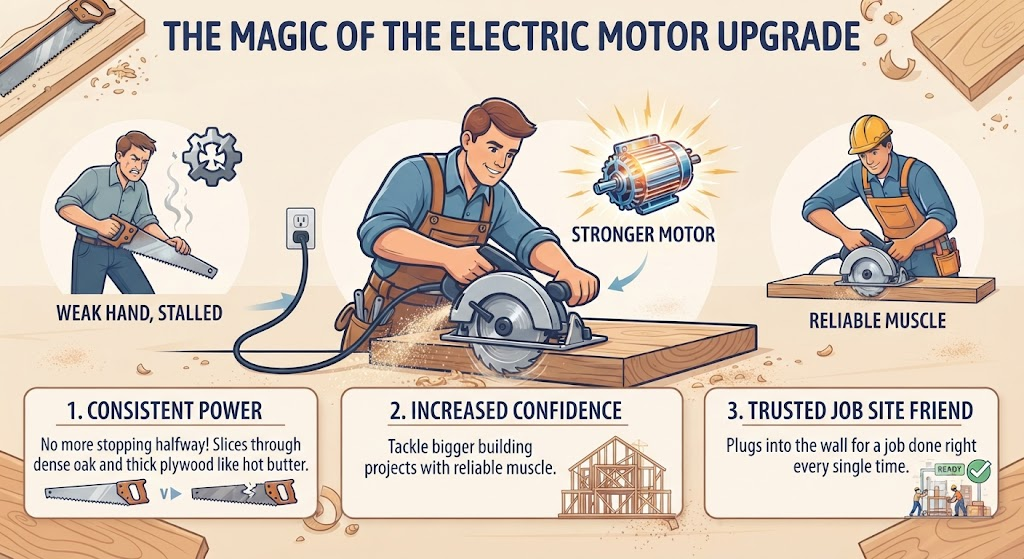
The Magic of the Electric Motor Upgrade
Electricity made everything in the world run faster, and saws were no exception. As electric cords got better and motors grew stronger, the cutting power inside the tool got a massive boost. Builders could now slice through dense oak and thick plywood like it was hot butter. There was no more stopping halfway through a tough board because the motor got too weak. This reliable muscle gave people confidence to tackle bigger building projects than ever before. The evolution circular saw became a trusted friend on every busy job site. You could plug it into the wall and know it would get the job done right every single time.
Cutting the Cord: Going Battery Powered
Imagine trying to cut a board on top of a tall roof, but your power cord is too short. Super annoying, right? Then came the coolest trick in modern tool history: rechargeable batteries! Engineers took heavy cords away and replaced them with slide-on lithium-ion power packs. Now, you can take your saw out to the middle of an empty yard or up a tall ladder with zero hassle. The battery-driven evolution circular saw gave builders total freedom to roam around. You just snap the battery in, pull the trigger, and start cutting anywhere you want. It feels a bit like having a magic wand in your tool belt!
Lighter Materials and Better Handling
Old power tools felt like lifting a heavy bag of rocks all day long. Your wrists would ache by lunchtime just from holding the heavy metal housing. Tool makers listened to tired builders and started using tough plastics and light aluminum parts instead of heavy iron. This made the whole machine much easier to balance and guide with one hand if needed. When a tool feels good in your hands, your cuts turn out straighter and cleaner too. This comfort upgrade was a key step in the evolution circular saw design path. Lighter weight meant you could work longer hours without feeling totally worn out by the end of the day.
Laser Guides and Straight Line Helpers
Have you ever tried to draw a pencil line and then cut right on top of it, only to veer off to the side? It happens to the best of us! To fix this, smart tech folks added tiny laser lights to the front of the tool. The bright red beam shines right where the blade is going to land before you even touch the wood. It acts like a little roadmap for your cut so you never get lost. This neat feature helps beginners cut like total pros on their very first try. The modern evolution circular saw keeps getting smarter by using simple lights to make our work look super neat and tidy.
Dust Blowers and Cleaner Workspaces
Cutting wood makes a huge cloud of dusty mess that covers your safety glasses and hides your pencil lines. Nobody likes breathing in floating wood chips or guessing where the cutting line went. To solve this messy problem, designers added air blowers powered by the spinning blade itself. These little fans push the sawdust away from your path as you cut. You get a clear view of your work from start to finish without stopping to brush the mess away. This thoughtful touch in the evolution circular saw design keeps your workspace clean and your lungs happy while you build cool stuff in the garage.
Bevels and Angle Cutting Tricks
Sometimes you do not just want a straight up-and-down cut; you need a slanted edge to fit two boards together like a picture frame. Old ways of doing this required messy hand measurements and tricky angles. Modern circular saws let you tilt the base plate sideways to make cool bevel cuts with a simple flip of a small lever. You can set the exact degree you want and slice through the wood at a slant. This extra trick turned a basic cutting tool into a multi-use workshop champ. The evolution circular saw proved it could handle fancy carpentry just as easily as basic chopping jobs.
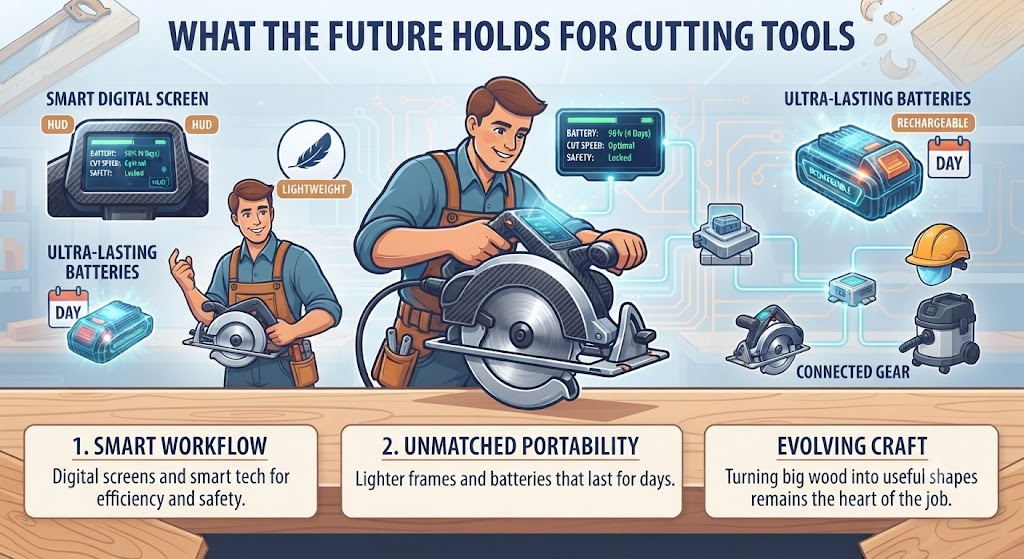
What the Future Holds for Cutting Tools
Where do we go from here after all these neat upgrades? Tool makers are already testing smart digital screens, even lighter frames, and batteries that last for days on a single charge. Some new models talk to other workshop gear to keep track of safety and battery health. But no matter how fancy the gadgets get, the main job stays the same: turning big pieces of wood into useful shapes. The wonderful evolution circular saw story is still being written every single day by inventors and builders alike. Who knows what neat tricks our saws will do ten years from now? One thing is for sure: it will involve a lot of spinning blades and happy woodworkers!
Frequently Asked Questions
Who invented the circular saw?
A clever weaver named Tabitha Babbitt is credited with making the first round saw design in the early 1800s after watching workers use water power to turn a circular blade.
Can a beginner use a circular saw safely?
Yes, as long as you wear safety glasses, read the manual, and make sure the safety guard works properly before starting your cut.
Why do some saws use batteries instead of cords?
Battery power lets you move around freely without tripping over wires or needing an electrical outlet nearby.
How do I keep my saw blade cutting smoothly?
Keep the teeth clean, remove old sticky sap, and replace the blade if it starts to feel dull or smoky when you cut.
What is a bevel cut on a saw?
A bevel cut is when you tilt the blade sideways to cut wood at a slanted angle instead of straight up and down.
Why is it called a circular saw?
It gets its simple name from the round, circular metal disc that spins around very fast to slice through wood and other materials.
Conclusion
We have traveled a long way from water wheels and heavy metal saws to light, battery-powered cutting tools! The evolution circular saw proves that a good idea just keeps getting better when smart people work on it. Whether you are building a birdhouse in your backyard or fixing a deck, this handy tool makes the job fun and fast. Now it is your turn to pick up a project and try your hand at woodworking. What kind of neat wooden project will you build next? Grab your safety gear and let your imagination get to work today!