
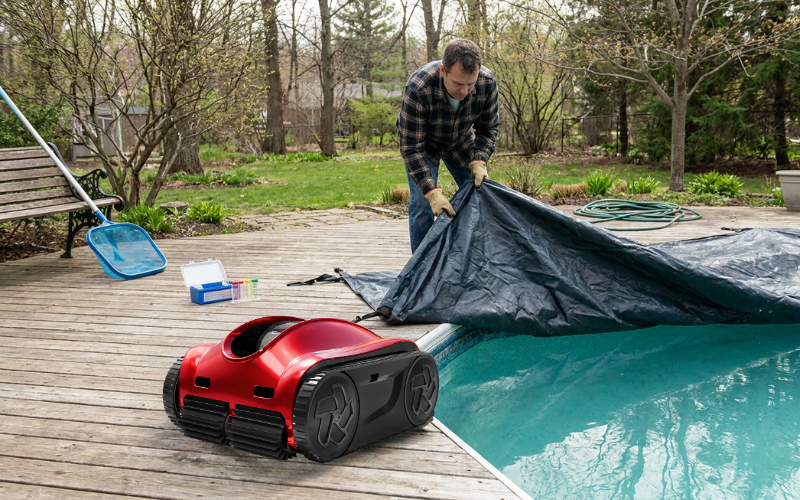
Opening a pool in spring can feel exciting. It also brings a long list of tasks. Covers need to come off. Water needs to be tested. Debris must be removed. Equipment has to be checked before anyone is ready to swim. Many pool owners want to move fast at this stage. That is understandable. After a long off-season, everyone wants clean water and a smooth start.
Still, spring pool opening works best when it follows the right order. Some tasks should happen early. Others should wait until the pool is more stable. This is also where many people misunderstand the role of a robotic pool cleaner. They either use it too soon or expect it to solve problems that belong to water chemistry, filtration, or manual cleanup.
A robotic cleaner can be very useful in spring. In many pools, it becomes one of the most helpful tools in the entire opening process. But it works best when owners know where it fits in the checklist. It is not the first step. It is also not the answer to every spring mess. Used at the right time, though, it can save real effort and help the pool settle into a clean routine much faster.
Why Spring Pool Opening Needs a Clear Order
After winter, pools often contain a mix of debris, chemical imbalance, and surface residue. Some pools look only slightly dusty. Others have leaves, cloudy water, pollen, or fine dirt across the floor and walls. If the pool cover was not tight or the weather was rough, the opening process may take even more effort.
That is why order matters. When tasks are done in the wrong sequence, owners often waste time. They may run equipment too early, clean the wrong thing first, or expect better results than the pool is ready to deliver.
Spring Problems Are Usually Layered
A spring pool rarely has just one issue. It may have:
- large debris from the off-season
- cloudy or unbalanced water
- fine dirt settled on the floor
- residue on walls or steps
- equipment that has not been checked in months
A robotic pool cleaner can help with part of that picture. It just should not be expected to solve all of it at once.
A Cleaner Works Best After the Pool Is Stabilized
The cleaner usually performs better after the pool has reached a more normal state. That means the major debris is gone, circulation is working, and the water is closer to balance. Once those basics are in place, robotic cleaning becomes much more effective.
Step 1: Remove the Cover Carefully
The first step is obvious, but it still affects everything that follows. The cover should be removed carefully so that dirt and standing water do not fall back into the pool.
Keep Extra Debris Out If Possible
If leaves and dirty water sit on the cover, remove as much of that material as possible before lifting it away. This reduces the mess that falls into the pool during opening.
Clean and Store the Cover Properly
Once removed, the cover should be rinsed, dried, and stored the right way. This part does not affect the robotic cleaner directly, but it makes the whole opening process more organized.
Step 2: Inspect the Pool and Equipment
Before running a full cleaning routine, pool owners should inspect the pool area and equipment. Look at the pump, filter, skimmer baskets, return lines, and visible fittings. Check for anything that looks damaged or out of place after the off-season.
Make Sure Circulation Can Run Normally
A cleaner should not be one of the first things dropped into a pool if circulation equipment still needs attention. The filtration system should be functioning properly first. Spring cleaning works better when the pool can circulate and filter water as expected.
Look at the Pool Surface Too
This is a good time to check the floor, walls, and waterline. Some pools may have light staining or residue from winter conditions. Others may only need regular debris removal. This inspection helps owners decide what the cleaner can realistically handle later.
Step 3: Remove Large Debris First
This step is often skipped by people who want automation to do everything. That usually leads to disappointment.
Start With Manual Removal
Leaves, sticks, heavy clumps of dirt, and other large debris should be removed first with basic tools. Large debris can overload the cleaner or fill filters too quickly. It is better to reduce that burden before robotic cleaning begins.
Save the Cleaner for the Right Debris Load
A robotic cleaner is usually more useful after the oversized mess is gone. It can then focus on the smaller debris, settled dirt, and regular surface cleaning that follow spring opening.
Step 4: Test and Balance the Water
Water chemistry should be checked early in the process. Spring water often needs adjustment before the pool reaches normal operating condition.
Do Not Ignore Cloudy or Off-Balance Water
Cloudy water, poor sanitizer levels, or pH problems can all make spring cleanup harder. These issues affect more than swimming comfort. They also affect how surfaces behave and how well a cleaner can support the opening process.
Stabilize Before Expecting Perfect Results
A robotic cleaner can remove dirt and debris, but it will not correct chemistry. If the water is badly out of balance, the pool may still look poor after a cleaning cycle. That does not mean the cleaner failed. It means the pool is not ready for full results yet.
Step 5: Brush Key Areas Before Deep Cleaning
Manual brushing still has a place in spring pool opening. This is especially true for steps, corners, and areas where fine residue built up during the off-season.
Brushing Loosens What Settled Over Winter
A quick brush helps loosen dirt and light buildup. Once that material is free, the filter system and robotic cleaner can deal with it more effectively.
Focus on Trouble Spots
Owners should give extra attention to:
- steps
- corners
- waterline edges
- behind ladders
- spots with visible residue
This small step often improves the results of the first robotic cleaning cycle.
Step 6: This Is Where a Robotic Pool Cleaner Fits Best
Now the pool is ready for the cleaner to play its most useful role. The cover is off. Large debris is removed. Equipment is running. The water is being balanced. Some brushing has already been done. This is the right moment to let the cleaner handle the remaining floor and wall mess more efficiently.
Use the Cleaner After the Pool Is Partly Reset
At this stage, a robotic unit can help remove:
- settled fine debris
- spring dust and pollen
- light wall dirt
- material loosened by brushing
This is where the cleaner starts to save real labor. It supports the transition from winter mess to normal maintenance.
The Best Fit Is Routine Recovery, Not Initial Rescue
An option such as the iGarden robotic pool vacuum fits best when the pool has already moved past the roughest part of spring opening. That is the key idea many owners miss. A robotic cleaner is excellent for restoring regular cleanliness after the first heavy work is done. It is less effective when thrown into a pool that still contains large debris and unstable water conditions.
Step 7: Clean the Filter and Repeat as Needed
Spring opening is rarely finished after one cycle. Most pools need repeated cleanup before they look truly ready.
Check the Cleaner and Its Filter Often
After the first cycle, inspect the cleaner and empty its filter if needed. Spring debris can be fine and heavy at the same time. A full filter reduces performance and makes later cycles less useful.
More Than One Cycle Is Normal
Owners should not expect one perfect pass. In spring, two or three cleaning cycles may be completely normal. The goal is steady improvement, not instant perfection.
Final Thoughts
A robotic pool cleaner can become one of the most useful tools in a spring pool opening checklist. But it works best in the middle of the process, not at the very beginning. First, remove the cover carefully. Check the equipment. Remove large debris. Test the water. Brush the main trouble spots. Then let the cleaner take over the routine recovery work.
That order makes a big difference. It protects the cleaner from unnecessary strain. It also gives owners better results with less frustration. Spring pool opening is always a process, but when each step happens at the right time, the pool becomes easier to manage and much faster to enjoy again.