
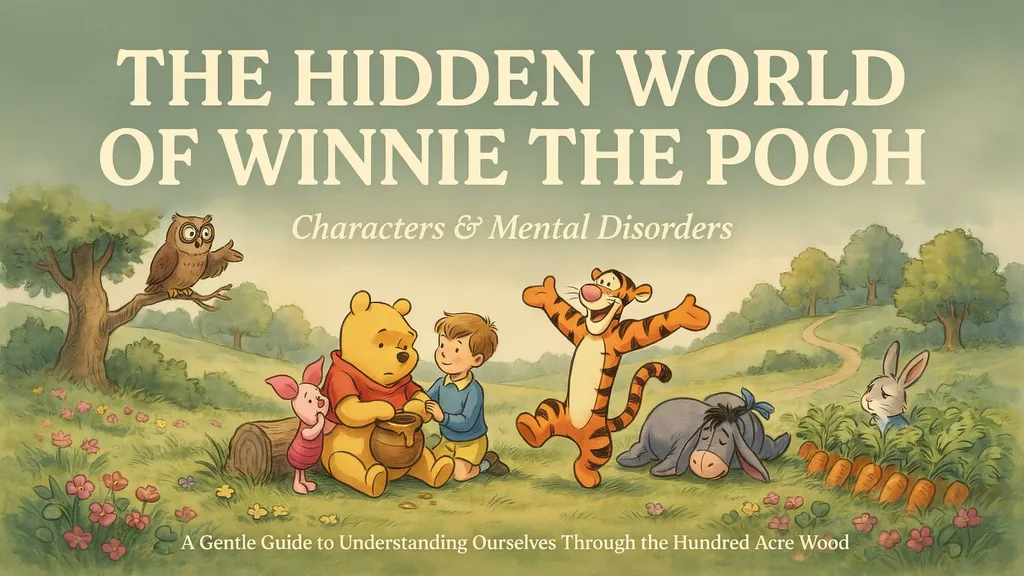
Have you ever wondered why we feel so close to the friends in the Hundred Acre Wood? These classic characters are more than just stuffed toys. Many people believe Winnie the Pooh Characters and Mental Disorders share a special connection. By looking at their funny quirks, we can learn a lot about how people think and feel. This simple guide explores these ideas in a way that is easy for everyone to understand.
What is the Winnie the Pooh Mental Health Theory?
The idea that winnie the pooh characters and mental disorders are linked started as a fun, thoughtful theory. Experts and fans noticed that each friend has a very specific personality. These traits often mirror common mental health challenges that real people face. It is not about saying these characters are “broken.” Instead, it is about using them as metaphors to talk about human emotions. By understanding these traits, we can build more kindness and empathy for others in our daily lives.
Winnie the Pooh: Managing ADHD and Impulsivity
Winnie the Pooh is the kindest bear, but he often struggles to focus on one thing. His love for honey is legendary, and he often gets distracted while looking for it. Some believe this shows signs of Attention Deficit Hyperactivity Disorder (ADHD). His “forgetfulness” and need for constant snacks might look like inattentiveness to some. However, his simple way of living shows us that being different is okay. He reminds us that even when we lose our way, we have friends to help us back home.
Piglet and Generalized Anxiety Disorder
Small and shy, Piglet is the friend who worries about almost everything. He often feels scared of “Heffalumps” or other unknown threats. This constant state of worry is why many link him to Generalized Anxiety Disorder (GAD). He teaches us that feeling nervous is a natural part of being alive. When we see Piglet face his fears with his friends, it gives us hope. It shows that even if you are small and scared, you can still be brave.
Eeyore: Understanding Depression
Eeyore is the most famous resident of the Hundred Acre Wood. He is often sad, gloomy, and expects the worst to happen. This outlook is why many associate him with persistent depression. Eeyore’s friends do not try to “fix” his mood. They simply stay by his side, showing that presence is the best gift. He teaches us that being sad is a valid emotion and that everyone deserves love, even on their darkest days.
Tigger and Hyperactive ADHD
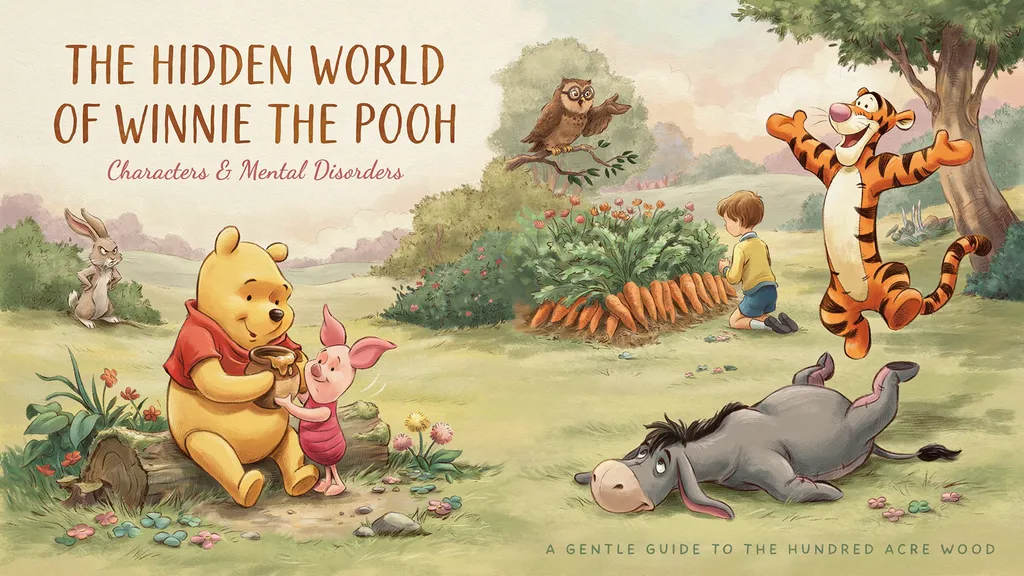
Tigger is full of life and cannot seem to stand still for even a second. He is always bouncing, laughing, and getting into trouble with his high energy. This impulsive and hyperactive nature is often compared to the hyperactive subtype of ADHD. Tigger’s spirit is contagious and fun, though it can lead to risks. He shows us that high energy is a beautiful trait when channeled correctly, even if it can be a bit overwhelming sometimes.
Rabbit: The Quest for Perfection
Rabbit loves his garden and needs everything to be just right. When his plans go wrong, he gets very frustrated and upset. His need for total control and organization is often linked to Obsessive-Compulsive Disorder (OCD). Rabbit wants the world to be tidy, which makes him feel safe. His story helps us understand why some people feel a deep need for order. It is a gentle reminder that perfection is not always possible, but trying is a good start.
Owl and Learning Differences
Owl is the smartest friend in the forest, but he often struggles with simple tasks like reading or spelling. This has led many to link him to dyslexia. Owl likes to show off his knowledge, even when he makes mistakes. He represents how people with different ways of learning still have so much to offer. Owl’s journey teaches us that being smart comes in many shapes and sizes. We should value what others know, even if they learn differently.
Christopher Robin: The Human Bridge
Christopher Robin is the only human in the forest. He acts as a bridge between the imagination and reality. Because he seems to create these friends to play with, some theories suggest he represents a mind that is full of complex thoughts. He is the leader who listens to everyone’s problems. His role reminds us that we are the ones who define our own friendships. He shows that taking care of our mental health is a very mature thing to do.
Why This Theory Matters Today
Linking winnie the pooh characters and mental disorders is not meant to be a strict medical diagnosis. Instead, it is a creative way to remove the stigma around mental health. When we talk about these characters, it becomes easier to talk about ourselves. It shows that whether you are like Pooh, Eeyore, or Piglet, you are worthy of kindness. These stories help us see that everyone is fighting a quiet battle, and empathy makes the world a better place.
How to Support Friends with Mental Health Challenges
If you have a friend who struggles, you can be like the characters in the Hundred Acre Wood. The best way to help is to listen without judging. You do not need to be a doctor to provide comfort. Sometimes, just sitting quietly with someone is enough. Encouraging them to seek help or simply offering a warm hug can change their entire day. Kindness is the most powerful tool we have to help those around us feel safe and understood.
Frequently Asked Questions
Are these characters actually diagnosed with disorders?
No, these are just literary characters. The links to mental disorders are based on personality theories and metaphors.
Is it bad to compare characters to mental illnesses?
Not necessarily. It can help people understand these conditions better, as long as it is done with respect and kindness.
Does everyone in the Hundred Acre Wood have a disorder?
Most experts say these are just distinct personality types that happen to share traits with real-world conditions.
Can children learn from these character traits?
Yes! It helps kids learn to be more patient and understanding of friends who act differently.
What is the most important lesson from these stories?
The most important lesson is that we should accept others as they are, quirks and all.
How can I learn more about mental health?
You can read books, visit reputable health websites, or talk to a professional counselor if you have questions.
Conclusion
Exploring the winnie the pooh characters and mental disorders gives us a fresh way to look at our own lives. We all have days where we feel like Eeyore, times when we are bouncy like Tigger, or moments where we worry like Piglet. These characters remind us that it is okay to be human. If you found this guide helpful, please share it with a friend who loves the Hundred Acre Wood. Let us keep the conversation about kindness and mental health going!